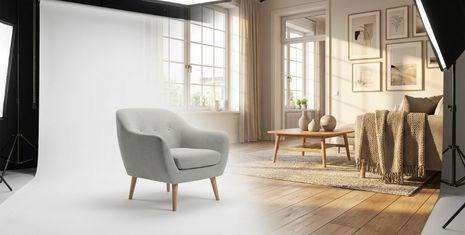
How to Create Perfect Rug Product Images for Amazon

Rugs sell through images - or they do not. Customers cannot feel the softness of the pile online or judge the color in real light. What remains is the product image, and on Amazon it determines in a split second whether a customer clicks or scrolls past.
The problem: Rugs are among the most difficult products for photography. Large formats, subtle textures, dozens of color variants - traditional shoots quickly hit their limits. This article shows you which image types Amazon requires, how to avoid common mistakes, and how to create professional rug images in minutes instead of weeks using AI tools. Related reading: Rug images for Otto and Rug conversion in your Shopify shop.
Why High-Quality Rug Images Boost Your Amazon Sales
Rugs are among the products customers would most like to touch - but online, only the image remains. This is precisely why image quality determines whether a customer buys or bounces more than in many other categories.
Customers want to recognize texture, assess colors, and imagine how the rug looks in their own living room. If your image does not deliver this, the customer scrolls on - no matter how good your product actually is.
- First impression: The main image determines in a split second whether someone clicks or scrolls past
- Trust: Professional images signal quality and justify higher prices
- Returns: Realistic representation of color and material significantly reduces incorrect purchases
Lifestyle images that show the rug in a real room typically achieve significantly better conversion rates than pure cutouts. The reason is simple: customers can better visualize the product and make more confident purchase decisions.
Amazon Product Images for Rugs and Their Requirements
Amazon has clear rules for product images - and with rugs, it pays to know them precisely. The main image follows strict guidelines, while alternative images offer more flexibility.
Technical Requirements for the Main Image
The main image requires a pure white background with the RGB value 255,255,255. The rug fills at least 85% of the image frame, and the minimum resolution is 1000 pixels on the longest side. For the zoom function, 2000 pixels is better.
Watermarks, logos, or text are not allowed. Amazon rejects images that violate these rules - even if the background only appears slightly grayish.
Rules for Alternative Images and Lifestyle Scenes
With alternative images, Amazon becomes more flexible. Here you can show lifestyle scenes, detail shots, and infographics. Amazon offers up to 9 image slots - use them all, because each slot is a chance to place a selling point.
Most sellers only use 3-4 slots. That is wasted potential.
Specifics for Color Variants
Each color variant needs its own product images. Customers expect the displayed image to match the chosen variant exactly.
Pay attention to consistent lighting across all variants. Different lighting conditions lead to color deviations - and color deviations lead to returns.
Image Types You Need for Your Rug Listing
A complete rug listing combines different image types. Each serves a different purpose in the purchase process.
Cutout on White Background
The cutout is your mandatory image for Amazon. It shows the rug without distraction and forms the basis for all further images.
A clean cutout can later also be used for lifestyle scenes and color variants. Invest in quality here - it pays off multiple times over.
Lifestyle Images in a Living Context
Show the rug in a realistic room setting: under a sofa, next to a bed, in the entrance area. These images help customers visualize the product in their own home.
The effect on conversion is measurable. Customers who see how a rug looks in a real room buy more often and return less frequently.
Detail Shots for Texture and Material
Close-ups of pile, weave structure, and edges are particularly important for rugs. Customers cannot experience the haptics, so show them visually.
- Pile height: Side perspectives show how dense and tall the pile is
- Weave structure: Close-ups of the surface convey quality
- Edges: Detail images of the finishing signal care
- Back side: Shows anti-slip coating or material quality
Dimension Drawings and Size Comparisons
Size uncertainty is one of the most common reasons for rug returns. A clear dimension drawing or size comparison with reference objects like a sofa, chair, or person removes this uncertainty.
Many customers can barely visualize “160x230 cm.” An image showing the rug next to a sofa communicates the size instantly.
Mastering Rug-Specific Challenges in Product Images
Rugs bring unique difficulties that other product categories do not have. Here are the most common ones - and how to solve them.
Conveying Texture and Haptics Visually
The biggest challenge: How do you show that a rug is soft? Angled views create depth and make the pile appear more three-dimensional.
Close-ups with side lighting emphasize the texture. Some sellers also show a hand running over the rug - this conveys haptics in an intuitive way.
Ensuring Color Accuracy Under Different Lighting Conditions
Color deviations between image and actual product lead directly to returns. The problem: Rugs look different under studio lights than in daylight.
Consistent lighting during the shoot or AI-powered color correction helps minimize this issue. Test your images on different screens before uploading.
Properly Staging Large Rugs
A 3x4-meter rug does not simply fit into a photo studio. There are several alternatives: room scenes where the rug is digitally placed, folded presentations for detail views, or shots from an elevated perspective.
AI tools like showcase can embed a cutout into realistic room scenes here - without a physical shoot.
Creating Color Variants Without Multiple Shoots
Organizing 10 shoots for 10 color variants is neither practical nor economical. The alternative: Color variants can be digitally generated from a single cutout.
This saves weeks of time and thousands of euros in costs - particularly relevant when you regularly add new colors to your range.
Best Practices for Perfect Rug Product Images on Amazon
These tips go beyond the basics and help you stand out from the competition.
1. Use All Available Image Slots
Amazon allows up to 9 images. Each additional slot is an opportunity: main image, lifestyle, detail, dimensions, back side, packaging, care instructions.
More images mean more information and less uncertainty for the customer.
2. Tell a Story with Your Images
The image sequence is not random. Guide the customer through the product: Overview, then Detail, then Application, then Size Info.
This structure answers questions in the order they arise. The customer feels guided rather than overwhelmed.
3. Optimize for Mobile Viewing
Over 70% of Amazon customers shop on mobile. Check whether details are recognizable on small screens.
Texture close-ups and dimension information need sufficient contrast and size. What looks good on desktop can be illegible on mobile.
4. Stay On-Brand with Large Ranges
With 50 or 100 rugs in your range, consistency becomes a challenge. A uniform style creates recognition value and trust.
Tools with a brand identity feature automatically ensure all images match visually - without manually post-processing each individual image.
Avoiding Common Mistakes in Rug Product Images
| Mistake | Problem | Solution |
|---|---|---|
| Blurry images | Looks unprofessional, lowers trust | At least 2000 pixels resolution |
| Gray instead of white background | Violates Amazon guidelines | Professional cutout processing |
| Missing size information | Customers uncertain, more returns | Add dimension drawing |
| Over-edited images | Product looks different from reality | Focus on product fidelity |
Blurry or Pixelated Images
With rugs, sharpness is particularly important because customers want to assess the texture. Blurry images make the product look low-quality - even when it is high-quality.
Incorrect or Uneven Background
Amazon rejects main images with non-white backgrounds. Even a slightly grayish background can lead to rejection. The RGB value is exactly 255,255,255.
Missing Size Information
“Larger than expected” and “smaller than expected” are the most common return reasons for rugs. A dimension drawing or size comparison costs little effort and saves a lot of trouble.
Over-Edited Images Without Product Fidelity
Too much editing leads to disappointment upon unboxing. The colors appear more intense, the texture softer - and the customer returns the product. Product fidelity is more important than perfection.
Creating Rug Images Without a Traditional Photo Shoot
Traditional photo shoots have their place - but for many use cases, there are faster and more affordable alternatives today.
Traditional Shoot vs. AI Image Generation Compared
| Aspect | Traditional Shoot | AI Image Generation |
|---|---|---|
| Time required | 2-6 weeks | Seconds to minutes |
| Cost per product | 250-500 EUR | 0.50-5 EUR |
| Color variants | Photograph each individually | Generate digitally |
| Lifestyle scenes | Studio, styling, props | Via prompt or template |
| Scalability | Linear with costs | Nearly constant |
AI tools like showcase are specifically optimized for Home & Living and place particular emphasis on product fidelity. Shape, color, and details of the original product are preserved.
When Each Method Is Worth It
Traditional photography remains valuable for hero products, campaign images, or when physical prototypes need to be shown. AI generation is ideal for color variants, rapid range expansion, lifestyle images, and seasonal updates.
Both methods can complement each other: a professional shoot for bestsellers, AI for the rest of the catalog.
Checklist for Perfect Rug Product Images on Amazon
Before you upload your rug images to Amazon, go through this checklist to ensure all important points are covered:
- Main image on pure white background (RGB 255/255/255)
- Minimum resolution 1600 pixels on the longest side
- At least one lifestyle image with room context
- Detail shot of pattern, texture, and material
- Dimension drawing or size comparison in the image
- All color variants individually photographed
- File formats and file sizes Amazon-compliant
If you can check off all points, your rug images are optimally set up for Amazon and ready for upload.
How to Get Started with Professional Rug Images for Amazon
Getting started is easier than you think. Here is a pragmatic workflow:
- Prepare your cutout: Upload a simple product image - on a white background or with automatic cutout processing
- Select image types: Decide which images you need: lifestyle, detail, dimensions, variants
- Generate scenes: Create lifestyle images in different room styles
- Set up brand identity: Ensure consistent results across your entire range
Get started for free, no credit card required. https://getshowcase.ai/
FAQs About Amazon Product Images for Rugs
How large should Amazon images for rugs be at minimum?
Amazon recommends at least 1000 pixels on the longest side to activate the zoom function. For rugs with fine textures, 2000 pixels or more makes sense to make details visible.
Can I use the same rug images for my own shop and Amazon?
In principle yes, but note Amazon’s specific requirements for the main image. Lifestyle images and detail shots can usually be used across channels.
How often should I update my rug product images on Amazon?
Update your images when the product changes, you have better shots available, or your conversion rate stagnates. Seasonal lifestyle images can also be beneficial.
Do I need a separate photo shoot for each rug color variant?
Not necessarily. With AI-powered tools, you can digitally generate color variants from a single cutout. This saves time and costs, especially with large ranges.
What file formats does Amazon accept for rug product images?
Amazon accepts JPEG, PNG, GIF, and TIFF. For the best quality with rugs, JPEG or PNG with high resolution is recommended.
About the author

Author
Tim Hoffmann
Chief Product Officer, getshowcase.ai
Tim Hoffmann leads the product strategy for the AI image studio at showcase (getshowcase.ai). He brings years of e-commerce experience in product data, marketplace integrations, and visual content creation. His focus: helping Home & Living retailers turn product cutouts into photorealistic lifestyle images and room scenes in minutes – without expensive shoots, with measurably better conversion. Tim shares practical strategies for product images that perform on marketplaces and in your own shop.