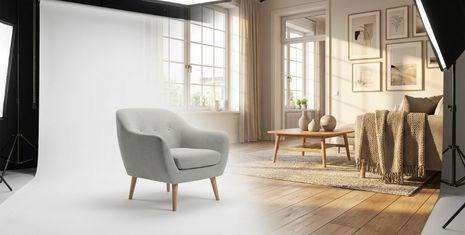
Which Image Strategy Increases Your Rug Conversion in Your Shopify Store?

Selling rugs online is frustrating. Customers can’t feel the texture, can’t gauge the size - and a cutout on a white background doesn’t answer any of their questions.
Your Shopify store’s conversion rate directly depends on how well your images close this gap. This article shows you which image types you need, how to convey size and material visually, and how to sell more rugs with AI-generated lifestyle scenes - without waiting weeks for photo shoots. Dive deeper with Rug images for Otto and Rug product images for Amazon.
Why Product Images Determine Your Rug Conversion
Rugs are particularly difficult to sell in eCommerce. Customers can’t feel the texture, can’t estimate the actual size, and can barely imagine how the product looks in their own living room. A cutout on a white background shows the pattern, but it doesn’t answer any of the questions customers have before buying.
This is exactly where the problem lies: uncertainty leads to abandoned purchases. Or worse - to purchases that come back as returns because the rug looks different than expected.
- Haptic substitute: Close-ups of pile and weave structure convey what customers can’t touch
- Size visualization: Without furniture as reference, customers almost always misjudge dimensions
- Styling inspiration: Customers aren’t just buying a rug - they’re buying a vision of how their room could look
The difference between an average and a compelling product image lies in context. Lifestyle images that show the rug in a real living situation trigger emotional purchase impulses. Cutouts alone don’t do that.
Why Rugs Are Difficult to Photograph
Rugs are among the most challenging products when it comes to convincing product photography. Before you optimize your image strategy, you should understand where the typical pitfalls lie - and how to specifically avoid them.
Flat Products Quickly Look Two-Dimensional and Unspectacular in Photos
A rug is essentially a flat rectangle, and that’s exactly how it often looks in a simple product photo. Without deliberate staging, the depth that makes an image interesting is missing. Angled camera perspectives, slight folds, or strategic placement in a room help you turn a flat object into a three-dimensional experience.
Patterns and Colors Need Even, Shadow-Free Lighting
Uneven light distorts colors and makes patterns appear blurry or falsified. Especially with rugs featuring fine ornaments or color gradients, you’ll quickly notice when one side is lit more brightly than the other. You need soft, diffused light without harsh shadows so your customers see online exactly the colors they can expect in reality.
Pile Height and Material Quality Are Barely Perceptible in Images
Whether short pile, high pile, or hand-knotted wool - in a standard product image, it all looks similar at first. Your customers can’t touch the rug, so you need to work with close-ups and side perspectives that make pile height and material structure visible. Without these detail images, material quality remains a promise your image doesn’t fulfill.
Actual Size Is Impossible to Estimate Without Reference Objects or Room Context
A rug on a white background could be 80x150 cm or 300x400 cm - on screen, both look identical. Without furniture, people, or other reference objects in the image, your customers have no way to estimate the actual size. This is exactly what leads to wrong purchases and returns that you can easily avoid with context-rich images.
What Is a Good Conversion Rate for Rug Shops on Shopify
The conversion rate describes the percentage of store visitors who actually make a purchase. In eCommerce overall, the average is around 2-3%. Home & Living stores - and rug shops in particular - often fall below that.
Why? Rugs require more explanation. Customers need more reassurance than with a t-shirt or a book. A conversion rate of 3-4% is already considered good for rug shops. Anything above that shows your product presentation is convincing.
The biggest lever for improvement? Better images. Stores that switch from pure cutouts to a mix of lifestyle images, detail shots, and size comparisons regularly report significant increases.
Which Image Types Your Rug Assortment Needs
Not every image serves the same purpose. A thoughtful gallery guides customers through the decision process - from the initial overview to the final purchase impulse.
Cutouts on White Background
The classic for category pages and marketplaces. Cutouts enable quick comparability and meet the requirements of Amazon, Otto, and other platforms. They show the product neutrally, without distraction - but also without context.
Lifestyle Images in Living Scenes
This is where the emotional purchase impulse is created. A rug under a dining table, next to a sofa, or in a children’s room - such images help customers envision the product in their own home.
With AI tools like showcase, you generate such scenes in seconds from a single cutout. No photo shoot, no studio rental, no weeks of waiting.
Detail Shots for Texture and Material
Close-ups of weave structure, pile height, and material transitions replace the act of touching. Especially with premium rugs or hand-knotted pieces, they’re indispensable. They convey quality and justify the price.
Dimension Drawings and Size Comparisons
Technical drawings with centimeter measurements reduce returns. When customers can visually grasp the dimensions, they’re less likely to order the wrong size. This saves you shipping costs and hassle.
Color Variant Gallery
Show all available colors in consistent presentation. Instead of photographing each variant individually, you can use AI-powered recoloring to create all color options from one original image - in minutes instead of weeks.
Cutout or Lifestyle Image for Rugs
The question isn’t either-or. Both image types have their place - the art lies in using them correctly.
When Cutouts Are the Better Choice
For category pages, search results, and marketplace listings, cutouts are standard. They enable quick comparisons and meet platform requirements. Amazon, for example, requires a white background as the main image.
When Lifestyle Images Sell More
On product detail pages, in social media ads, and on homepage banners, lifestyle images are more convincing. They trigger emotional responses and help customers make purchase decisions with more confidence.
The Optimal Combination of Both Image Types
The proven gallery structure looks like this: cutout as the first image for overview and marketplace compatibility, followed by two to three lifestyle scenes, then detail shots and dimensions.
| Image Type | Use Case | Effect |
|---|---|---|
| Cutout | Category pages, marketplaces | Comparability, overview |
| Lifestyle | Product page, ads, social media | Emotion, purchase impulse |
| Detail | Product page | Trust, quality impression |
| Dimension drawing | Product page | Reassurance, fewer returns |
Conveying Rug Size and Scale Visually
Size errors are the most common reason for rug returns. Customers regularly underestimate how large or small a rug actually is. A 200x300 cm rug sounds large - but how large is that really?
Measurements Directly in the Image
An overlay with centimeter measurements on the product image is the most direct method. Customers grasp the information instantly without having to search the product description.
Size Comparison with Furniture
Show the rug under a sofa or dining table. Customers know the approximate dimensions of their own furniture and can thus intuitively estimate the size. A rug peeking out from under a three-seater sofa conveys more than any centimeter measurement.
Room Mockups with Scale
Present the rug in a realistic room size. showcase generates such scenes with correct proportions - the rug doesn’t suddenly appear larger or smaller than it actually is.
Visualize Color and Material Variants Without Prototypes
The classic problem: You have a rug in eight colors but only one prototype. Photographing each variant individually costs time and money - often 200-400 € per color variant when you factor in photographer, studio, and post-processing.
The alternative is AI-powered recoloring. Upload a cutout, adjust the color digitally, and in seconds you have a new variant.
- Before: Produce prototype, plan shoot, wait 2-4 weeks
- After: Adjust color digitally, create new variant in seconds
Product fidelity is crucial here - the colors must be exactly right. showcase selects its AI models specifically based on how well they preserve shape, color, and details of the original.
Create Room Scenes for Rugs Without a Photo Shoot
The workflow is simpler than you might think. Here’s the typical process:
1. Prepare the Cutout
Upload a product image with the background removed. If your image still has a background - no problem. showcase removes backgrounds automatically.
2. Generate a Matching Living Scene
Choose a room style: modern, Scandinavian, classic, industrial. The AI inserts your rug into the scene, including matching shadows and lighting. The result looks like a real photo.
3. Ensure Brand Consistency
Use Brand Identity settings so all images match your brand. showcase analyzes your website and generates scenes based on it that match your visual identity.
Tip: Start with your 10 best-selling rugs. Generate three room scenes each and compare the conversion with your existing cutouts over 4-6 weeks.
Optimize Rug Images for Mobile Viewing
Over 60% of Shopify visitors come via mobile devices. An image that’s convincing on desktop can be unusable on a smartphone.
- Image crop: The rug must be clearly recognizable even on a 6-inch screen - avoid too much white space
- Zoom function: Use high-resolution images (at least 2048 pixels) so pinch-to-zoom shows sharp details
- Loading time: Compress files to under 500 KB without visible quality loss
Test your product pages on your phone. Scroll through the gallery, zoom into details, check loading time. What you see there is what your customers see too.
Improve Image Loading Times and Shopify Performance
Slow images cost conversions. Every additional second of loading time increases the bounce rate. This applies especially to mobile users with weaker connections.
Use modern formats like WebP instead of JPEG. Shopify converts images automatically, but you can already optimize the source files. The balance: images large enough for the zoom function but compressed enough for fast loading times.
Increase Shopify Conversion Rate Through Image A/B Tests
Don’t know which image strategy works best for your assortment? Test it. A/B tests compare two variants and show you which converts better.
- Test 1: Cutout vs. lifestyle as the first gallery image
- Test 2: Neutral vs. stylish room scene
- Test 3: Number of images per product (3 vs. 6 vs. 9)
With AI-generated images, you can quickly create and test many variants. Instead of waiting weeks for a shoot, you generate three different room scenes in minutes - and let the data decide.
Checklist for Compelling Rug Images in Your Shopify Store
Before you publish or update your product pages, go through this checklist. It helps ensure your rug images meet all important requirements and that your conversion rate doesn’t suffer from avoidable gaps.
- Cutout on neutral background available
- At least one lifestyle image with room context
- Detail shot of pattern, texture, and pile height
- Size comparison or measurements in the image
- Multiple perspectives (top view, angled, close-up)
- All color variants individually shown
- Alt texts and file names with relevant keywords
If you can check off every item, your product page is visually well-positioned. If an item is missing, you know exactly where to focus next.
Sell More Rugs with the Right Image Strategy
The key takeaways: Image variety beats single cutouts. Context sells. Consistency strengthens your brand.
Rug shops that switch from pure cutouts to a thoughtful image strategy typically see significant conversion increases and fewer returns due to size errors.
Getting started is easier than you think: Upload your first cutouts, generate lifestyle scenes and color variants, and test the results with your own products.
Start for free with showcase - no credit card required
FAQs on Rug Product Images in Shopify Stores
How many product images should I show per rug in my Shopify store?
Show at least five images: one cutout, two lifestyle scenes, one detail shot, and one size representation. More images give customers more confidence - stores with 6-9 images per product report lower return rates.
What image resolution is optimal for rug product images on Shopify?
Use images with at least 2048 pixels on the longest side. This enables a sharp zoom function so customers can recognize texture and material. Shopify automatically compresses images for fast loading times.
Can I use AI-generated rug images on marketplaces like Amazon?
Yes, as long as the images accurately represent the actual product. Pay attention to product fidelity in terms of shape, color, and material. showcase selects its AI models specifically based on how well they preserve details.
How often should I update my rug product images in my store?
Update images for seasonal trends, new interior styles, or when A/B tests show that other scenes convert better. With AI tools, this takes minutes - you don’t need to plan a new shoot.
Do lifestyle images improve the conversion rate for rugs in Shopify stores?
Yes, lifestyle images have a measurable impact on conversion rates for rugs. They help customers envision the product in their own home and reduce the uncertainty that often leads to abandoned purchases with cutouts alone. Room scenes showing the rug in a realistic living environment are most effective - for example under a dining table or in front of a sofa. The best approach is to test with your top products: Replace the second gallery image with a lifestyle scene and compare conversion over four to six weeks.
About the author

Author
Tim Hoffmann
Chief Product Officer, getshowcase.ai
Tim Hoffmann leads the product strategy for the AI image studio at showcase (getshowcase.ai). He brings years of e-commerce experience in product data, marketplace integrations, and visual content creation. His focus: helping Home & Living retailers turn product cutouts into photorealistic lifestyle images and room scenes in minutes – without expensive shoots, with measurably better conversion. Tim shares practical strategies for product images that perform on marketplaces and in your own shop.