AI Product Images eCommerce: Legal Guide 2026
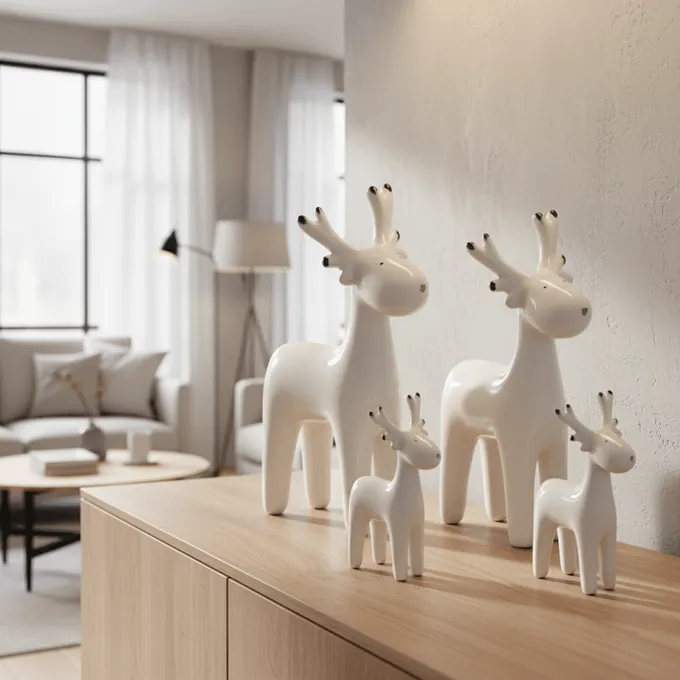
Can I use AI-generated product images commercially? Who is liable if an AI image infringes third-party rights? And do I need to label AI images in my online store?
These are the three questions eCommerce teams ask us most frequently - and for most use cases, the answers are reassuringly clear. This article explains the current legal situation in Germany and the EU, what specifically applies when using getshowcase.ai, and what you need to watch out for from August 2026 onwards.
Note: This article provides general legal information and does not constitute individual legal advice. For binding assessments of your specific use case, we recommend consulting a lawyer specialising in IT and media law.
The Short Answer: Key Takeaways at a Glance
Before diving into the details - here are the direct answers to the most common questions:
Can I use AI-generated product images commercially? Yes. getshowcase.ai (an AI platform for eCommerce product photography) exclusively uses AI models whose licence terms explicitly permit commercial exploitation and redistribution to third parties. Images generated with showcase are fully available for your commercial use - including passing them on to your customers.
Does my AI product image infringe third-party copyrights? As a rule, no. Under German law, AI-generated images do not enjoy copyright protection of their own (§ 2(2) UrhG) - there is no third party whose copyright could be infringed.
Who is liable for AI-generated product images? You, as the user, bear responsibility for how you use the generated images. showcase ensures on a technical level that product integrity and scene neutrality are maintained.
Do I need to label AI images in my store? Not yet mandatory. From 2 August 2026, the EU AI Act introduces a labelling obligation for photorealistic AI images - including product photos in eCommerce. A possible postponement of certain obligations through the Digital Omnibus is currently being negotiated in the EU Parliament (see below).
Who Owns AI-Generated Images? The Legal Situation in Germany (2026)
Do AI Images Have Copyright?
AI-generated images have no copyright in Germany. The German Copyright Act (UrhG) protects only “personal intellectual creations” by humans under § 2(2) - an AI is not a human and therefore can neither be an author nor claim copyright protection.
The practical consequence: Purely AI-generated images have no author in Germany and are therefore fundamentally not protected as a copyrighted work. There is no third party who could prohibit your use or demand licence fees - neither the AI provider nor any external author.
This assessment is broadly consensus among German legal experts (sources: urheberrecht.de, IT-Recht-Kanzlei, eRecht24) and was confirmed in court for the first time in February 2026: the Munich Local Court ruled in a landmark decision (Case No. 142 C 9786/25, 13 Feb 2026) that AI-generated graphics do not enjoy copyright protection where the human has not significantly shaped the output through their own creative decisions. US courts have similarly confirmed that AI-generated works without substantial human creative input do not qualify for copyright protection.
What About Mixed Works - When You Edit the AI Image?
Copyright can arise if you edit an AI image to such an extent that your own creative contribution is present - for example, through extensive manual image design. In that case, you as the designer would be the author of the edited work.
For the standard showcase use case - you upload a cutout, the AI generates a background and room scene - this exception generally does not apply. The creative contribution lies with the AI, not the user.
Usage Rights: What AI Providers Regulate in Their Terms - and What showcase Specifically Guarantees
Even without copyright, an AI provider can impose contractual restrictions - and many do. Some AI tools, for example, only permit private use, require crediting the AI as a source, or exclude redistribution to third parties. Every eCommerce team should check this before using AI-generated images in stores or on marketplaces.
showcase takes a clear approach here: We exclusively use AI models - including specialised Home & Living models with licensed training data as well as models from major providers such as Google’s Nano Banana Pro from the Gemini family - whose licence terms explicitly permit commercial exploitation and redistribution to third parties. This means: you can use images generated with showcase in your store, list them on marketplaces, and pass them on to your customers - without additional licence fees or restrictions from the model provider.
This is not a given. Anyone who uses AI tools without checking the licence terms of the underlying models risks, in the worst case, using images for which they have no redistribution rights. With showcase, this is settled from the start.
For showcase users: The usage rights to the generated images belong to you. You can pass images on to your customers (retailers, agencies). For specific questions about your usage model - for example, as an agency or reseller - contact us directly.
The Residual Risk: When Can Copyright Infringement Still Occur?
“AI images have no copyright” does not mean that AI-generated content is automatically risk-free in every situation. There are two relevant residual risks:
1. The AI Output Comes Too Close to a Protected Work
AI models are trained on large datasets - which may include copyrighted images. In theory, an AI-generated image can come “too close” to an existing protected work and thereby trigger an infringement.
How relevant is this for product images? For neutral living room scenes, abstract backgrounds, and generic furniture staging, this risk is practically very low. It would only apply if a generated image recognisably resembles a specific protected work - which is virtually impossible with standardised product photography backgrounds.
showcase relies on licensed training material and specialised Home & Living models designed for neutral, generic scenes - no style copying, no reproduction of recognisable works.
2. Trademark Infringements Through Generated Content
If an AI image contains recognisable brand symbols, protected designs, or logos, trademark law can be infringed - even with AI content.
In the typical showcase use case - your own product in front of a generated room scene - the image contains no third-party trademarks. It would be different if you explicitly instructed the AI to generate or imitate a third-party branded product. This should always be avoided.
Can I Commercially Redistribute AI Product Images?
AI-generated product images may be commercially redistributed - under certain conditions. The question retailers and agencies ask us most frequently is essentially:
“I upload my own cutouts, have the AI generate backgrounds and scenes, and pass the finished images on to my customers. Is that legally permissible?”
Based on the current legal situation: Yes, this is generally permissible - provided the following conditions are met:
- The uploaded source images belong to you or you hold the corresponding usage rights. Do not upload third-party product photos without having the rights to do so.
- The showcase licence permits commercial redistribution. showcase exclusively uses models that explicitly allow commercial use and redistribution to third parties. For specific usage models such as agencies or resellers, contact us directly if needed.
- The generated images do not depict real people and do not contain third-party trademarks or protected elements. This is generally the case with standard product scenes for Home & Living.
Liability for the use of generated images lies with you as the user - just as with any other commercial image source. This is not specific to AI; the same applies to stock photos or agency productions.
Do AI Product Images Need to Be Labelled in Online Stores?
Before 2 August 2026, there is no legal labelling obligation for AI product images in eCommerce. From that date, the labelling requirement under EU AI Act Art. 50 applies - including for photorealistic product images.
The EU AI Act (Regulation (EU) 2024/1689) entered into force on 1 August 2024 and is being applied in stages. For eCommerce retailers and product images, the most relevant provision is Article 50 - the labelling obligation for AI-generated content.
Who Has to Do What? Provider vs. Deployer
The AI Act clearly distinguishes between two roles - and this is important for eCommerce teams:
Provider (Art. 50(2)) - this is showcase as the manufacturer of the AI system. The obligation: ensure technical, machine-readable labelling in the image files (e.g. via SynthID, C2PA, or EXIF metadata). showcase will implement this requirement as part of its product development.
Deployer (Art. 50(4)) - this is you as the retailer or agency publishing the AI images. The obligation: apply a visible, clear label for the end consumer when the images qualify as photorealistic deepfakes - i.e. they create the impression of a real photograph. This applies in particular to fully AI-generated lifestyle images and furniture staging scenes that look like a real photoshoot. showcase does not leave you alone with this part either: the built-in AI badge stamps an “AI-generated” notice onto every download and marketplace export for you.
What Needs to Be Labelled from August 2026?
The labelling obligation applies to photorealistic AI images that could be perceived as real. The decisive factor is whether an average viewer would assume the content is authentic (source: ki-kanzlei.de, Heuking Kühn Lüer Wojtek). In practice, this means:
| Image Type | Labelling Required from Aug. 2026 |
|---|---|
| Fully AI-generated lifestyle image (photorealistic) | Very likely yes |
| AI-generated furniture staging: real product in AI room scene | Likely yes |
| AI-generated background with real product photo embedded | Likely yes |
| AI colour variants of a real product photo | Grey area - precautionary approach recommended |
| AI-based background removal (cutout) | Generally no - no new content generated |
| Pure AI upscaling / noise reduction without content changes | Generally no |
| Highly stylised, recognisably non-real AI illustrations | No |
Important: The legal interpretation for product images in eCommerce is not yet finally settled. No court has yet decided whether a piece of furniture in front of a generated living room background qualifies as a “deepfake” under the AI Act. The assessments are based on Art. 50 EU AI Act and current legal literature.
How Must Labelling Be Done?
The AI Act requires two forms of labelling:
- Machine-readable: Embedding in the image metadata (EXIF, XMP, or C2PA standard) - this is primarily the AI provider’s responsibility (i.e. showcase)
- Human-readable: A visible notice such as “AI-generated image”, “Created with AI”, or a watermark - this is your responsibility as the retailer/deployer. In showcase, the built-in AI badge handles this on request: activate it once and the notice is automatically stamped onto every download
Digital Omnibus: Will the Deadline Be Postponed?
The European Commission proposed the “Digital Omnibus” in November 2025 - a simplification package that, among other things, affects parts of the AI Act (source: Deloitte, activeMind.legal). Relevant for the labelling obligation: the machine-readable labelling requirement for providers (Art. 50(2)) could be postponed to November 2026 for existing systems. The deployer obligations (Art. 50(4)) - i.e. your obligation as a retailer to provide visible labelling - are not affected by the postponement as things currently stand and continue to apply from August 2026.
The Digital Omnibus is currently being negotiated in the EU Parliament and has not yet been adopted. The safest strategy: prepare as if August 2026 applies - and treat any postponement as a bonus, not as a planning basis.
What Are the Penalties for Non-Compliance?
Violations of the transparency obligations under Article 50 can be fined up to EUR 15 million or 3 per cent of global annual turnover - whichever is higher (source: mylurch.com). For SMEs, the proportionality principle applies, so actual penalties are likely to be significantly lower. In addition, it cannot be ruled out that violations of the labelling requirements could be pursued by competitors through cease-and-desist proceedings.
What Does This Mean for You Today?
Currently (before August 2026), there is no legal labelling obligation for AI product images in eCommerce.
Our recommendation: Start preparing now. Determine internally which images are AI-generated and develop a process for labelling by the deadline. Those who communicate transparently early build trust - and avoid cease-and-desist risks from August 2026 onwards.
Visible labelling is already built into showcase: the AI badge automatically stamps an “AI-generated” notice onto every download and marketplace export, with a customizable badge designer to match your brand. The machine-readable layer comes with the models we use via embedded watermarks; complementary metadata standards are being implemented as part of ongoing product development.
Can AI Images Deviate from the Real Product? The Unfair Competition Risk
Misleading AI product images can have consequences under competition law. Germany’s Unfair Competition Act (UWG) prohibits misleading product representations. If an AI-generated product image misrepresents the actual product - for example, with different colours, dimensions, or materials - this can constitute misleading advertising under § 5 UWG.
Use AI images in a way that accurately represents the real product. Lifestyle images showing your furniture in an attractive room are unproblematic. Images showing a wood surface that is actually plastic can become problematic.
showcase is technically designed for high product integrity. This is a core design principle of the platform - and at the same time your best legal safeguard against unfair competition risks.
Summary: What You Should Do Now
Actionable immediately:
- Make sure you hold usage rights to all uploaded source images
- showcase exclusively uses models that permit commercial use and redistribution - you do not need to separately verify or secure this
- Document internally which images are AI-generated (for the August 2026 deadline)
- Use AI images in a way that accurately represents the real product - no misleading materials or colours
By August 2026:
- Develop a process for visible image labelling in your store - this is your obligation as a deployer. For labelling directly on the image, you can use the AI badge in showcase
- Check whether your shop system (Shopify, Shopware, WooCommerce) supports the relevant metadata fields or labelling features
- Consult a specialist lawyer if you use AI images at scale or redistribute them through third parties
- Monitor the Digital Omnibus - possible deadline changes for the technical labelling requirement (Art. 50(2)) are still under negotiation
Optional but recommended:
- Start voluntarily labelling AI images now - this builds customer trust and makes you future-proof
Frequently Asked Questions (FAQ)
Do I need to acquire usage rights when passing AI product images on to my customers?
No - not with showcase. We exclusively use AI models whose licence terms explicitly permit commercial redistribution to third parties. The usage rights to the generated images belong entirely to you and can be passed on to your customers. For specific arrangements such as agencies or resellers generating images on behalf of their clients, contact us directly - we will clarify this together.
What happens if an AI-generated product image accidentally reproduces a copyrighted work?
Liability lies with the user who publishes the image - not with the AI provider. showcase minimises this risk through specialised models and licensed training material. As an additional safeguard, you can subject images to a brief plausibility check before publication.
Does the labelling obligation for AI images also apply on marketplaces like Amazon or Otto?
Yes. The labelling requirement under EU AI Act Art. 50 applies from August 2026 to all channels where you publish images - your own store, marketplaces, social media. How marketplaces will implement this technically in their systems is still open. We are actively monitoring this and will keep you informed.
Are AI-generated furniture staging scenes subject to the labelling requirement?
Likely yes, if the result looks photorealistic. This is precisely the case with professional furniture staging: a real cutout is embedded in an AI-generated room scene that looks like a real photoshoot. From August 2026, you should label such images. showcase covers both layers: the models we use embed machine-readable watermarks, and the built-in AI badge stamps a visible “AI-generated” notice onto every download on request.
Are AI colour variants of product photos subject to the labelling requirement?
This is a grey area. If you merely change the colour of a sofa cover using AI, it could be argued that no substantially new representation is created. The precautionary principle, however, suggests also labelling colour variants - especially when the result looks photorealistic and the viewer cannot tell that the colour is AI-generated.
Can suppliers deliver AI-generated images to me without labelling?
From August 2026, you as the deployer must label images when you know or should know that product images are AI-generated. It does not matter who created the images (source: mylurch.com). Proactively request information from your suppliers and manufacturers about the use of AI in image creation and add a corresponding disclosure obligation to your procurement terms.
Can I copyright-protect an AI-generated product image to prevent competitors from copying it?
No - AI-generated images do not enjoy copyright protection under current law, as no personal human creative contribution is involved. The Munich Local Court confirmed this explicitly in February 2026. In theory, unfair competition protection against imitation could apply if you can demonstrate significant own effort (concept, staging, post-processing). This must be assessed on a case-by-case basis.
Which AI tools can I use commercially for product images?
That depends on the licence terms of the respective tool. Not every AI image generator permits commercial use and redistribution to third parties. Check the terms of use before deployment - restrictions are common, especially with free tools. With showcase, commercial use including redistribution to customers is explicitly covered in the licence terms.
Can I use AI images for advertising and social media?
Yes, in principle. For social media, however, it is already advisable to label AI-generated images as such - many platforms already require this, and it strengthens trust with your audience.
Can AI product images lead to cease-and-desist claims?
Yes, in two scenarios: first, if an AI-generated image misrepresents the product (§ 5 UWG) - for example, showing incorrect materials or colours. Second, from August 2026, if the labelling obligation under Art. 50 EU AI Act is not met. Violations could be pursued by competitors through cease-and-desist proceedings. Those who document internally now which images are AI-generated and set up a labelling process early minimise this risk.
Conclusion: AI Product Images in eCommerce Are Legally Usable - With Clear Rules
AI-generated product images may be used commercially and redistributed to customers in Germany and the EU. Under § 2(2) UrhG, they are not subject to any third-party copyright. Liability for their use lies with the user. From 2 August 2026, a labelling obligation for photorealistic AI images applies under EU AI Act Art. 50 - with obligations split between the provider (technical marking) and the deployer (visible labelling).
For the standard case - uploading your own cutouts, generating lifestyle images and staging scenes, using them commercially and redistributing them to customers - the use of AI tools like showcase is generally permissible under current German and EU law.
The two most important points: your product images should accurately represent the actual product (no unfair competition risk) - and you should start preparing for the labelling obligation from August 2026 now. Those who act early are on the safe side.
If you have specific questions about your usage model, get in touch. And for all legally binding assessments, we recommend consulting a specialist lawyer for IT and media law.
Further reading:
- How to Label AI-Generated Images: Step-by-Step Guide for Retailers
- AI Platform for Lifestyle Images and Color Variants from Cutouts
- AI Product Photography for Home & Living: Photorealistic Lifestyle Images Without a Photoshoot
- Multi-Product Staging: Showing Multiple Items in Room Scenes for Cross-Selling
Related on getshowcase.ai:
showcase is an AI platform for Home & Living product photography. Simple cutouts become photorealistic lifestyle images, colour variants, and room scenes in seconds - no photoshoot, no waiting. Create your first images for free today.
About the author

Author
Tim Hoffmann
Chief Product Officer, getshowcase.ai
Tim Hoffmann leads the product strategy for the AI image studio at showcase (getshowcase.ai). He brings years of e-commerce experience in product data, marketplace integrations, and visual content creation. His focus: helping Home & Living retailers turn product cutouts into photorealistic lifestyle images and room scenes in minutes - without expensive shoots, with measurably better conversion. Tim shares practical strategies for product images that perform on marketplaces and in your own shop.